
Light becomes part of the artwork.
Unlike an opaque surface, glass doesn’t simply reflect light.
Light can travel through it.
GLASS + PLACE
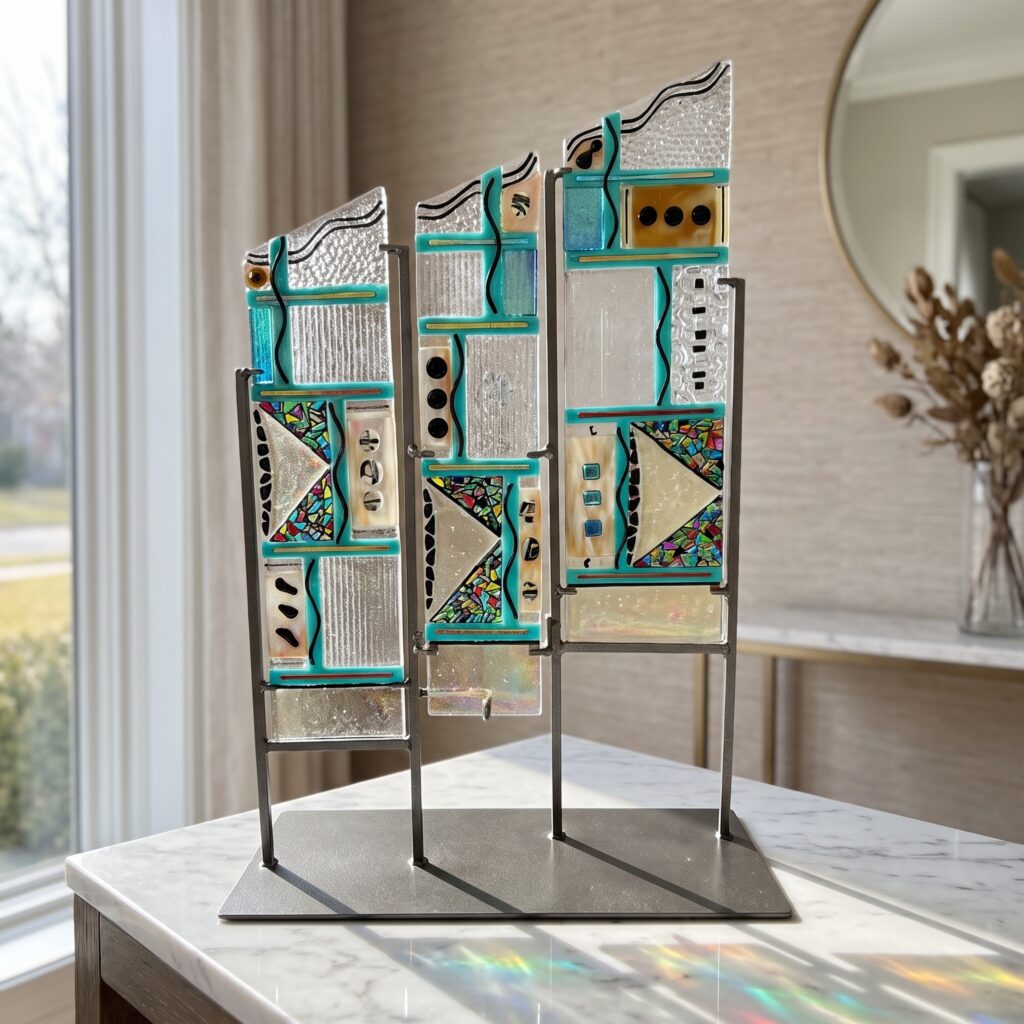
As it does, colors intensify, transparent areas glow and shadows become extensions of the artwork itself.
The result is never completely static.
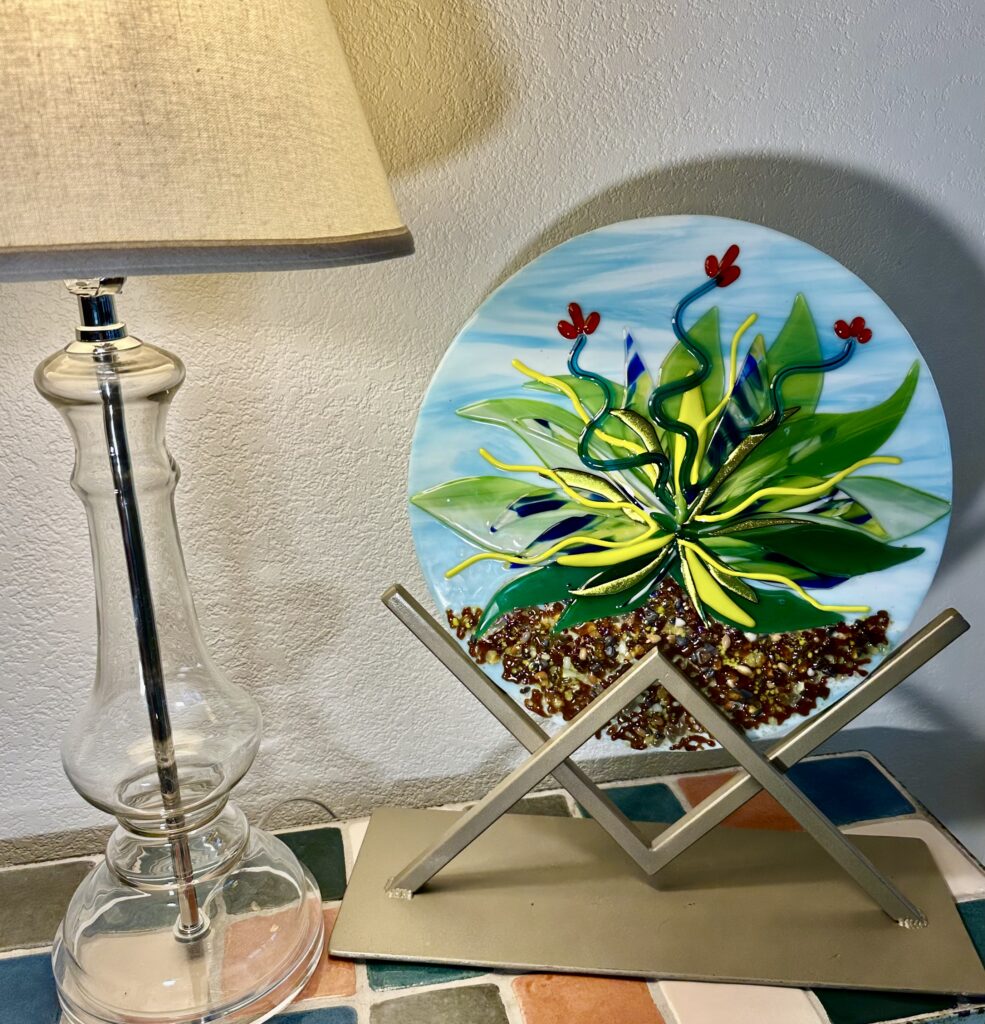
The artwork doesn’t stop at the edge of the glass. Mounting glass away from a wall allows light to move behind it. The resulting shadows can create a second composition—one that changes throughout the day. The wall becomes part of the artwork.
GLASS + FIRE
And then there’s the part I can’t completely control. Glass is fired in a kiln at temperatures high enough to soften and fuse the individual pieces. Temperature matters. Timing matters. Chemistry matters. And glass occasionally has ideas of its own. That’s one reason no two pieces are exactly alike.
Perhaps I was always going to end up here.
Before becoming a glass artist, I spent thirty years as an interior designer.
I learned to think about color, proportion, scale, texture and—most importantly—how people experience the spaces where they live.
Today, those same instincts guide my work in glass.
I’m still designing for spaces.
I’ve simply changed materials.